<> UVA School of Medicine · Charlottesville, Virginia
Matt Trowbridge, MD, MPH
I teach clinicians and researchers to combine three things they already have — domain expertise, design thinking, and generative AI — so the people closest to a problem can build for it themselves.
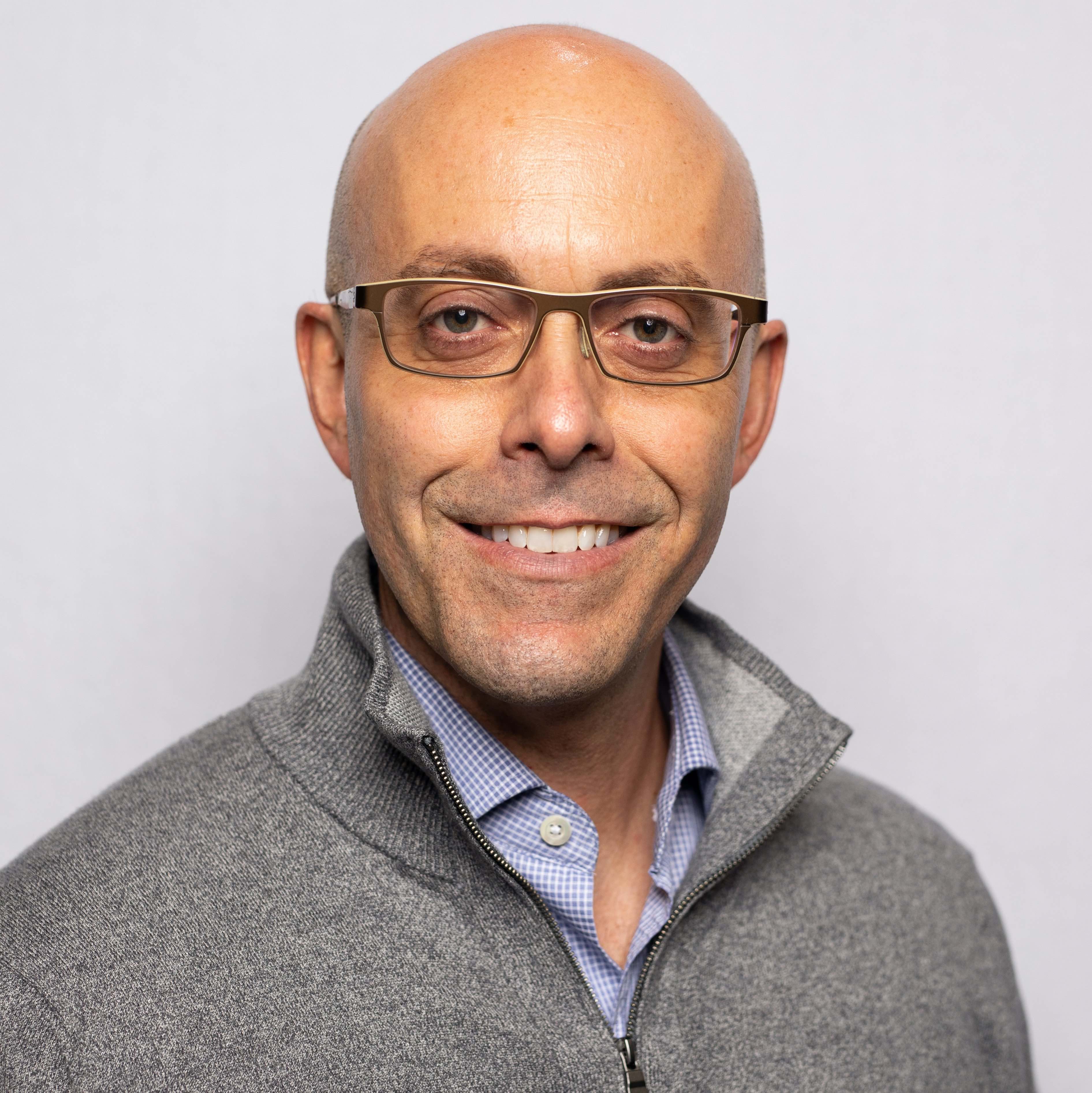
I’m an Associate Professor of Emergency Medicine and Public Health Sciences at the University of Virginia School of Medicine, where I teach EM residents and direct the UVA Medical Design Program.
My research is in the built environment — how the constructed world shapes health, equity, and well-being. Working alongside architects and designers on that question got me fascinated by how designers think: how they hold a problem open, move through ambiguity, and get to something testable fast. That interest became a program, and the program became the through-line of everything below.
The Through-Line
For a decade I taught first-year medical students to work like designers — on real problems, with real clients across UVA Health and Charlottesville. What I didn’t expect is that all of that time spent learning to approach problems like a designer, and the facilitation skill for holding a group in an ambiguous space, would turn out to be exactly how you work well with generative AI.
That’s the bet behind my current work. These systems are probabilistic, not deterministic; they reward the instinct to explore, iterate, and critique rather than to dictate every step. Which means the scarce skill in this moment isn’t technical — it’s knowing which problem is worth solving, and being able to hold it open long enough to find out.
AI doesn’t replace clinical expertise — it makes that domain expertise buildable.
What I Build and Teach
UVA Medical Design Program
A decade of teaching human-centered design to clinicians — 200+ since 2017 — working on real problems with real clients across UVA Health and Charlottesville.
Health Design Sprint
A two-week M4 elective where eight medical students with no coding background shipped working clinical tools in ten days. How it works.
Faculty workshops
The same method, taught to researchers in any discipline. Most recently for AI Research @ UVA — the session and its slides.
Selected Work
Two projects I use to show what the method looks like when it’s pointed at my own research rather than a classroom. Both are walked through in detail, with their numbers, in the workshop slide notes.
Can the published literature tell us how mature medical AI actually is? An AI-built pipeline read the field at scale — several hundred thousand abstracts and full-text articles, 4,968 papers labeled in a single session — while the definition of maturity, the scope, and the gold standard stayed mine. Five weeks from the first search string to a preliminary map in front of UVA’s AI Strategy Council. An adversarial review in week one caught the AI inventing a headline statistic in our own draft; every number has been script-emitted from committed data since.
What would a social-license-to-operate valuation look like for data centers? The question turned out not to be unanswerable but unassembled — every fact already sat in a public record, and AI collapsed the cost of turning records into data. A 266-project census went from “we should count the denominator” to a shipped, source-hashed dataset in a day, with agents run adversarially against their own output to catch inflated metrics and duplicate events.
Get in Touch
I’m always glad to hear from people working on this. In particular:
- Bringing a workshop to your school, department, or program — the two-hour faculty session travels, and the method isn’t health-specific
- Teaching collaborations — guest sessions, electives, or curriculum work that puts design and AI in students’ hands
- Research collaborations — especially where a question looks infeasible because the data has never been assembled
- Just to compare notes — if you’re experimenting with this way of working, I want to hear what you’ve found
mtrowbridge@virginia.edu
On this site: the methodology · Health Design Sprint · faculty workshops